Tips to Analyze Lata Night Chart Patterns for Better Understanding
Learn effective tips to analyze Lata Night Chart patterns. Understand number flow, singles, jodi, patti trends, and chart study methods for better clarity.
 W3signal
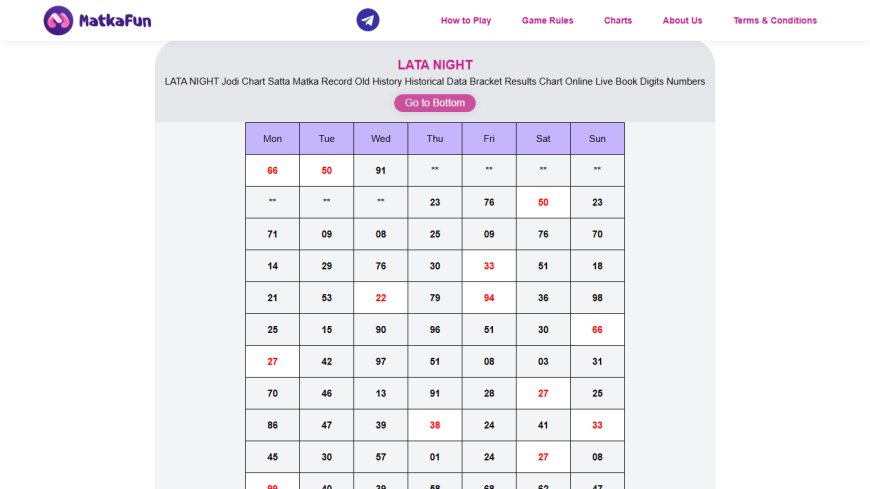
Analyzing the Lata Night Chart properly can help users understand how numbers appear, repeat, and change over time. For many beginners, the chart may seem complicated, but with the right approach, pattern analysis becomes simple and clear.
This article shares practical tips to analyze Lata Night Chart patterns, helping you read the chart confidently and improve your overall understanding.
Understand the Chart Structure First
Before analyzing patterns, it is important to clearly understand the chart layout. lata night chart usually includes:
-
Date or day
-
Single digit
-
Jodi numbers
-
Patti (panel) numbers
Knowing where each number appears helps avoid confusion during analysis.
Focus on Single Digits First
Single digits are the foundation of the chart. When analyzing patterns:
-
Check which digits appear frequently
-
Observe digits that repeat on consecutive days
-
Note digits that have not appeared for a long time
This helps you understand the basic number flow.
Study Jodi Number Combinations
Jodi numbers provide deeper insights into chart movement. While analyzing jodi patterns:
-
Look for repeating jodi pairs
-
Identify jodi numbers appearing after gaps
-
Compare jodi changes across weeks
Maintaining a simple notebook or record can help track these combinations easily.
Observe Patti (Panel) Trends Carefully
Patti numbers are three-digit combinations and often change daily. To analyze patti patterns:
-
Check if similar digits repeat in different positions
-
Identify mirror or reverse patterns
-
Observe number sequences over multiple days
Avoid focusing on just one day; long-term observation gives better clarity.
Analyze Weekly and Monthly Charts
Daily results show limited information. For better understanding:
-
Review weekly charts for repetition patterns
-
Compare monthly data for long-term trends
-
Observe which numbers dominate specific periods
This broader view improves pattern recognition.
Look for Repetition and Gaps
One of the most effective analysis techniques is studying repetition and gaps:
-
Repeated numbers indicate strong chart activity
-
Long gaps show numbers that have not appeared recently
Balancing both helps you understand chart behavior more logically.
Avoid Over-Analyzing Random Data
A common mistake is trying to find meaning in every number. Remember:
-
Not every number follows a visible pattern
-
Some results are purely random
-
Focus on consistency, not assumptions
Clear thinking leads to better understanding.
Maintain a Personal Chart Record
Creating your own record improves analysis skills. You can:
-
Write daily results manually
-
Highlight repeating numbers
-
Mark special patterns
This habit improves focus and chart reading speed.
Learn from Past Charts
Old Lata Night Charts are valuable resources. By studying them:
-
You learn how patterns change over time
-
You gain confidence in reading charts
-
You understand number behavior better
Past data often reveals useful insights.
Be Consistent and Patient
Pattern analysis requires time. For best results:
-
Study the chart daily
-
Avoid skipping days
-
Stay patient and observant
Consistency leads to better understanding and confidence.
Conclusion
Analyzing Lata Night Chart patterns is all about clear observation, patience, and regular study. By focusing on single digits, jodi, patti trends, and long-term charts, users can understand how numbers behave over time. Avoid overthinking and maintain a simple, structured approach to chart analysis.
With these tips, beginners and regular users alike can improve their understanding of Lata Night Chart patterns effectively.